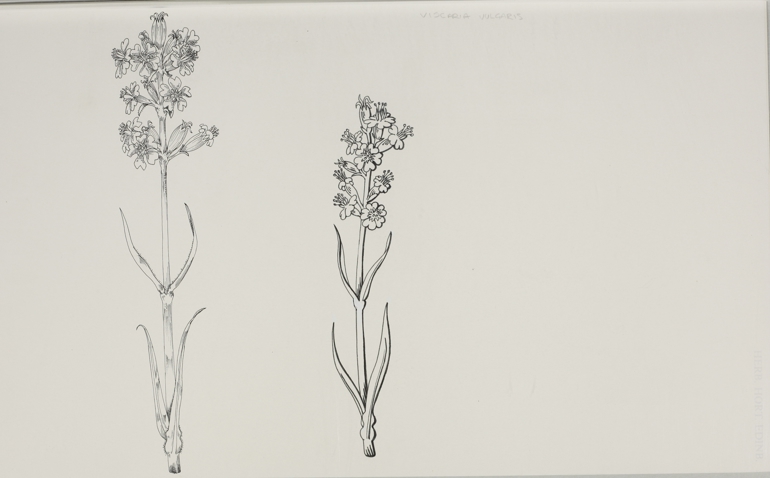

The Sticky Catchfly is one of the UK’s rarest native species, with the vast majority of its population isolated to steep, south-facing rocky outcrops, crags, and scree slopes in Scotland. It occurs naturally in around nine locations with strongholds in the Ochil Hills, where the crags of Dumyat host 20% of the entire British population, Holyrood Park and Arthur’s Seat in Edinburgh. In fact, it was even adopted as Edinburgh’s official county flower in 2004. The Sticky Catchfly became prized for its vibrant pink flowers and its unique sticky stem, which was particularly admired by King James VI when he would walk up Arthur’s Seat. In traditional folk medicine, it was used to treat a myriad of conditions, such as coughs, colds, digestive and lymphatic issues, alongside skin complaints due to its anti-inflammatory and wound-healing properties.
It has declined and disappeared from many of its former locations due to overgrazing on hillsides and gorse encroachment, pushing the surviving populations to isolated, inaccessible cliffs. Thankfully, efforts are being made to clear scrub and alter land management practices, especially in the Ochil Hills, leading to excellent bounceback in the area.