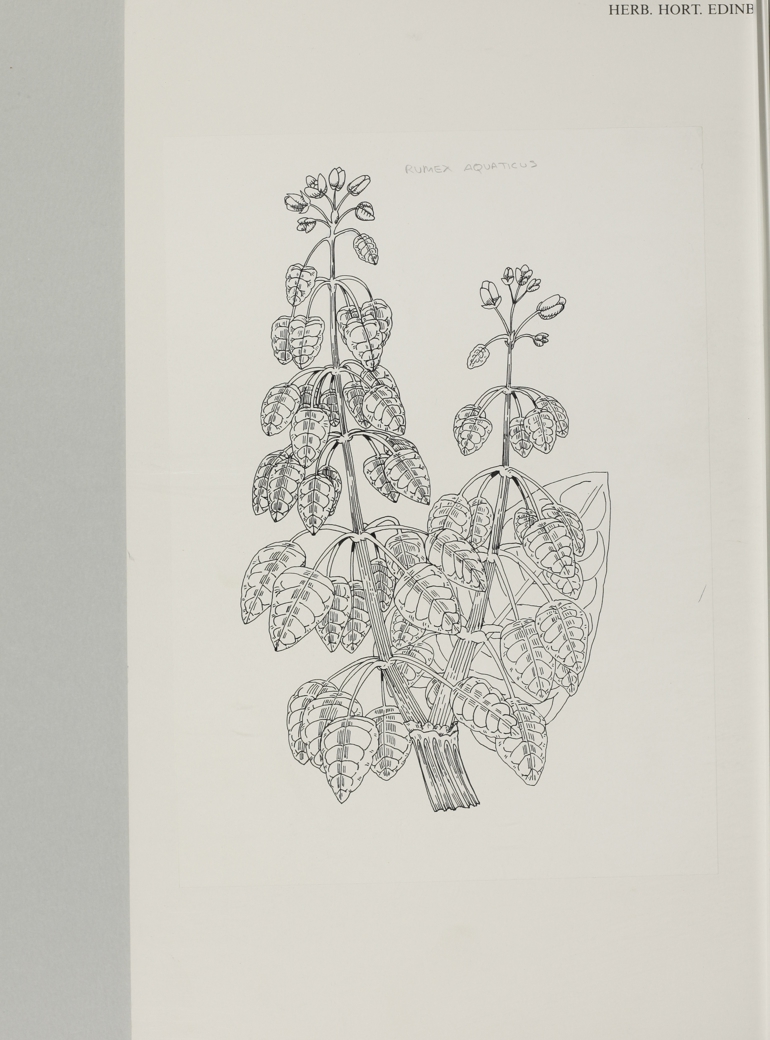

Scottish Dock is a rare, threatened plant native to the Loch Lomond area in Scotland. The plant has significant cultural and medicinal value to Gaelic speakers. The tall, robust flowering seedhead of the dock (cuiseag ruadh) must never be used to drive cattle or horses because of its deep roots and structure; it was believed to have direct connections with the supernatural world. Switching an animal with the cuiseag ruadh could spell misfortune, illness, or cause fairy mischief.
The dock also played a central role in the ancient autumnal harvest traditions of Gaelic communities. When the final sheaf of grain was harvested, it was fashioned into a corn dolly known as the cailleach-bhuana, or harvest-hag. The dolly was then traditionally dressed in dock leaves and left on the land of a neighbouring farmer who was still hard at work. This act was thought to pass on the curse of the Cailleach - the ancient Gaelic Goddess of winter and fallow land - to the struggling farmer.
Docks were also important barometers for seasonal changes, indicating whether farmers' livestock would make it through the winter. A traditional Gaelic proverb: ‘Chan ith i copag na Bealltainn’ (’She won't live to eat the Beltane docken’), evoked this idea. Beltane (1st May) marks the official beginning of Scottish summertime, and if an animal could not hang on until the May docks emerged, it was considered a lost cause.
In traditional Gaelic medicine, the dock was also thought to relieve stomach pains and skin complaints, and the roots would be crushed to create a poultice for cuts and bruises, whilst the seeds were boiled down to treat a cough. The large, cool leaves were also a practical material for Highland dairy maids to wrap and preserve blocks of fresh butter.