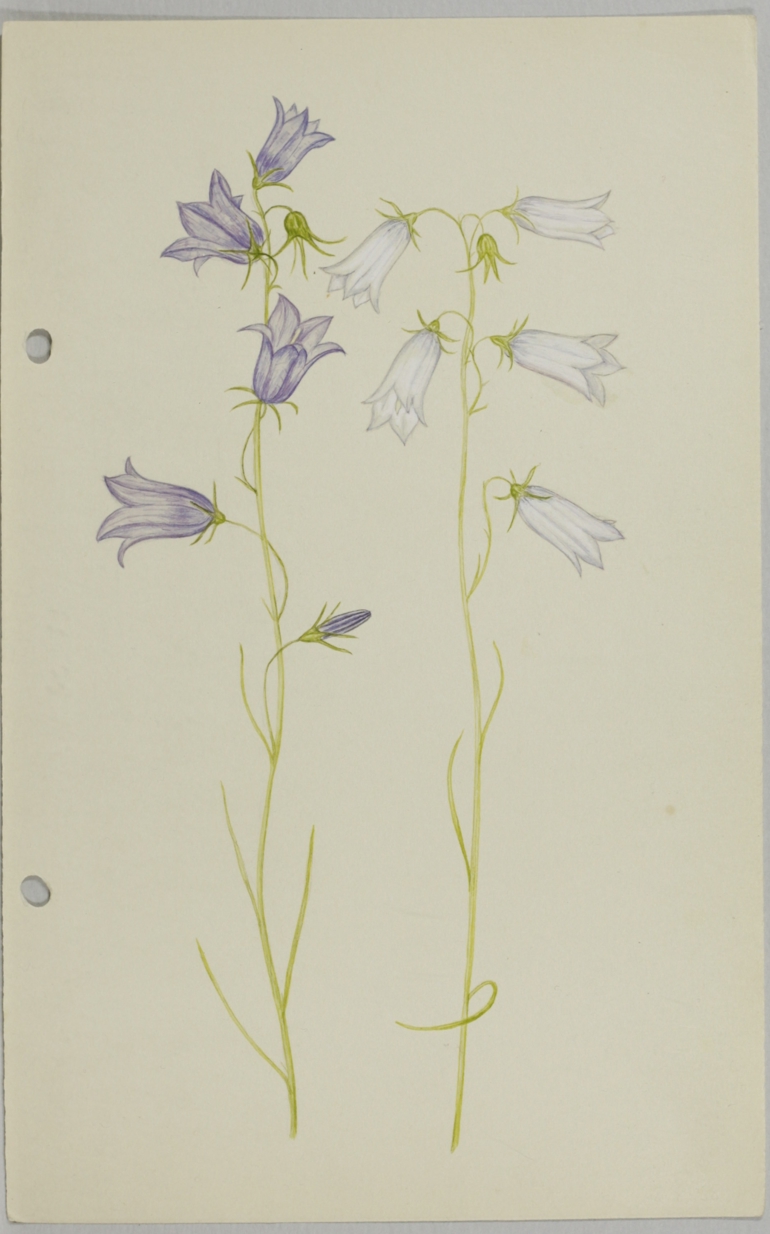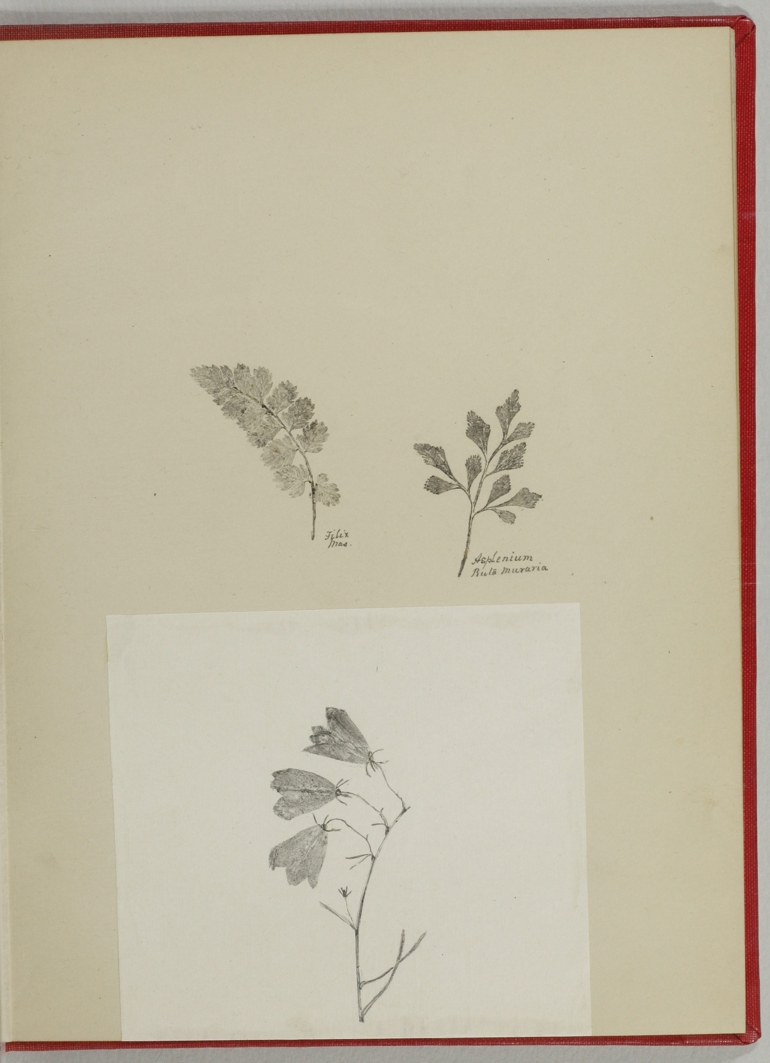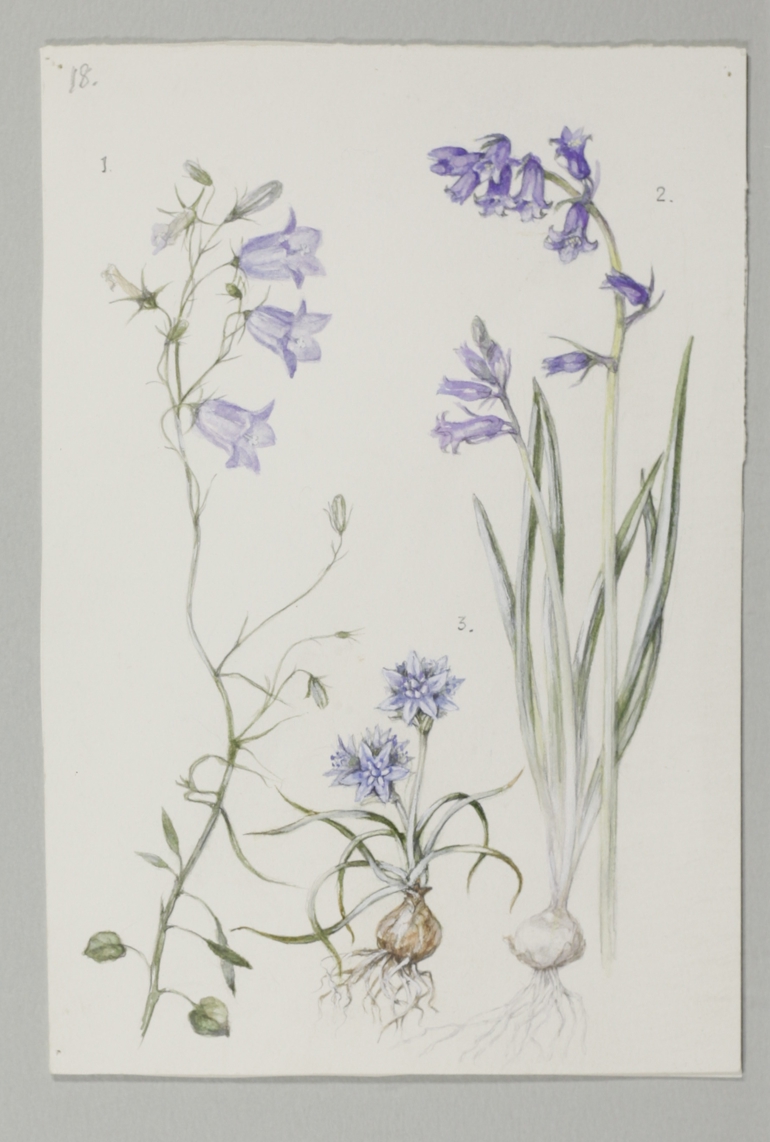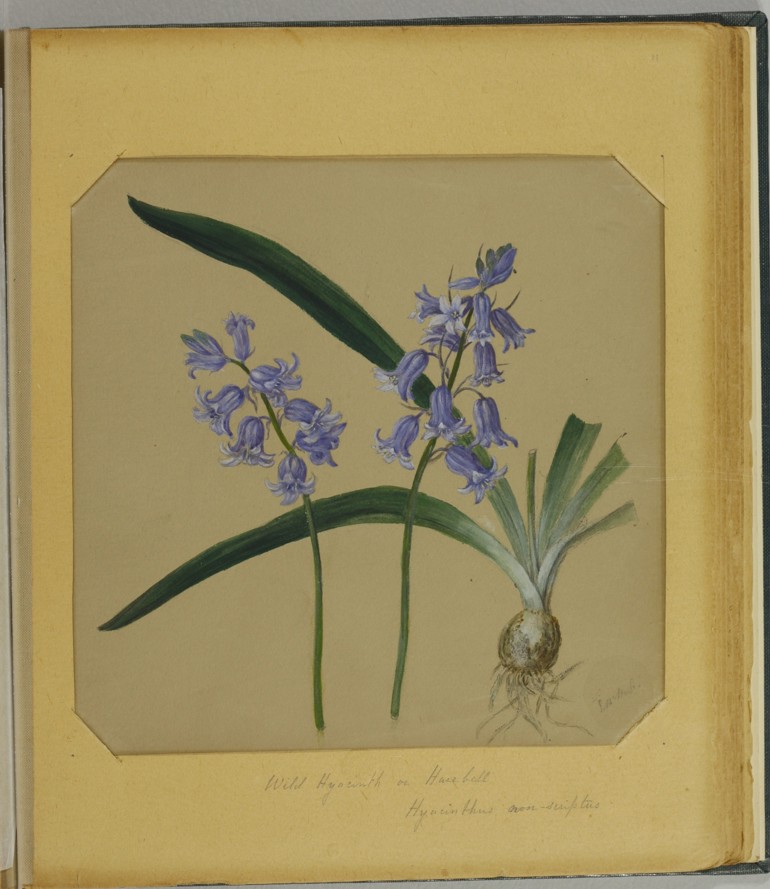

The Harebell, or Scottish Bluebell, is a dainty plant that is deceptivly hardy, enjoying windswept coastal dunes to rugged mountain peaks. It hates damp ground, happy instead to cling to stone walls or cliff tops where it can escape the wet. As the flowers bloom late, they provide an important source of nectar for bees when other flowers have begun to wilt and die. Economically and culturally, the flowers of the Harebell were crushed to make a blue dye for traditional tartan.
In Scottish folklore, the plant has nicknames like ‘witches' thimble’, ‘dead man’s bells’ and ‘fairy bells’ as it was thought that witches could transform into hares and hide amongst the blossoms. If you pluck a Harebell, it releases a milky sap which was thought to be the specific sap that witches used to create shapeshifting spells and gain the power of flight. The 'dead man's bells' nickname comes from the plants association with the Devil, quite literally considered the Devils bell because of its drooping flowers.