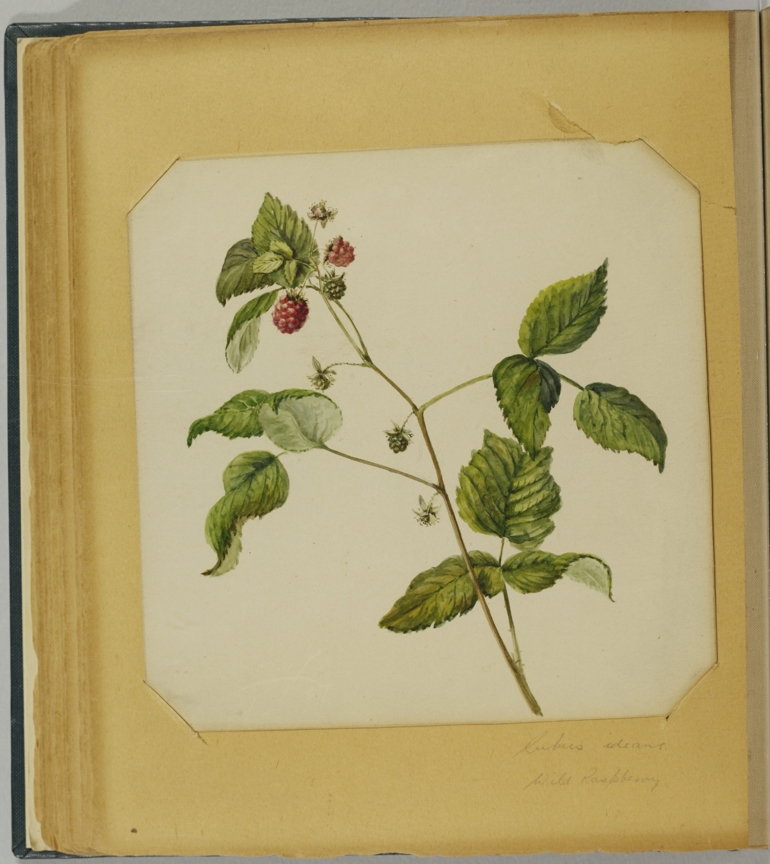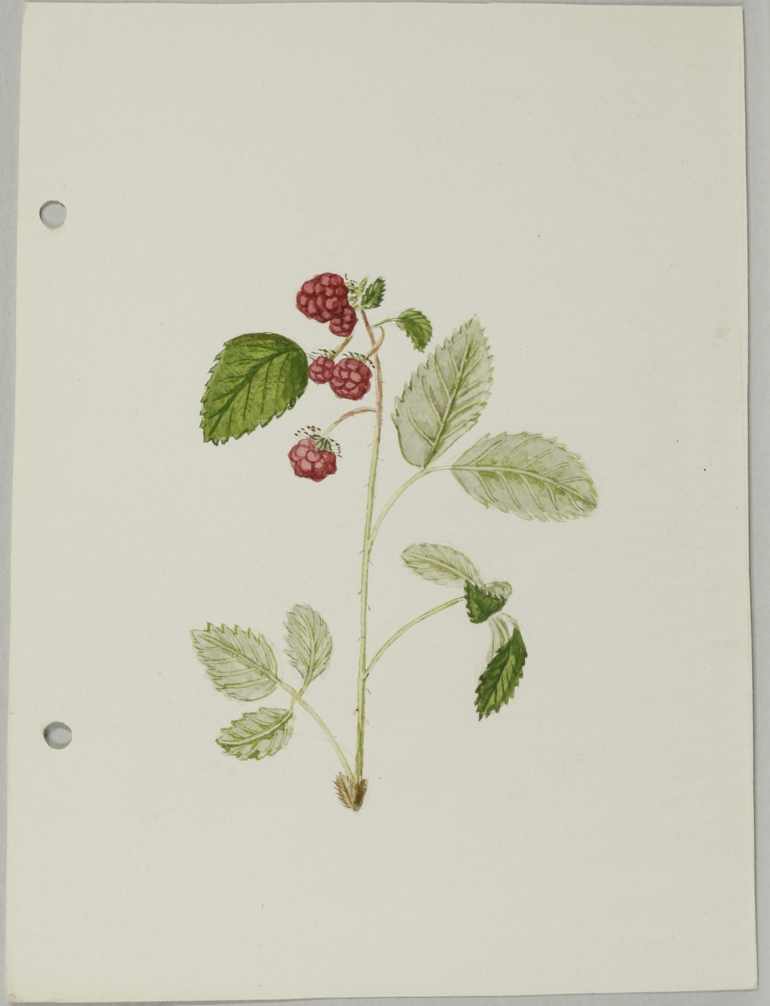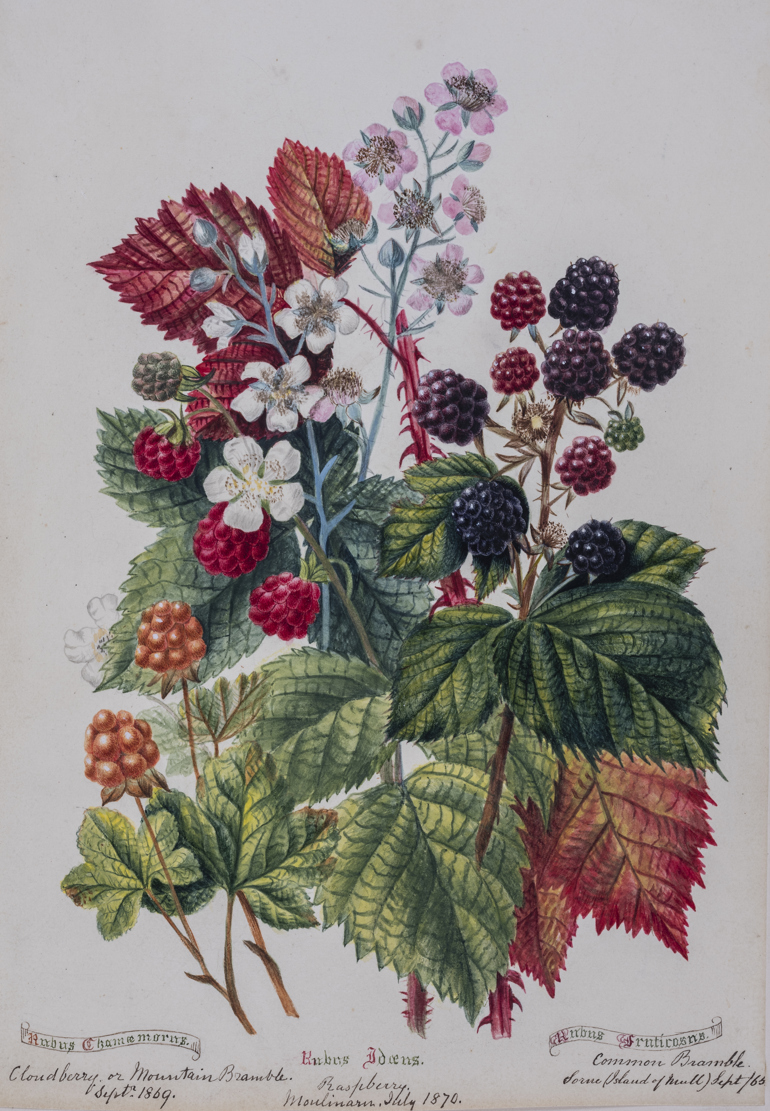

The Raspberry is of significant economic and cultural value in Scotland, with the majority of British raspberries grown on Scotland’s east coast. In the 1950s, Scottish raspberries were so highly sought after that a dedicated overnight train, nicknamed ‘The Raspberry Express’, was used to transport freshly picked raspberries to London before they spoiled. Wild raspberries are native to Scotland, and archaeological evidence suggests that hunter-gatherers foraged them thousands of years ago. From a scientific standpoint, however, they aren’t berries at all but an aggregate fruit comprised of tiny bubble-like structures called ‘drupelets’.
In the Highlands and Islands, people historically cut raspberry canes and hung them above their doors, believing the sharp spikes on the stems would hook and trap malevolent spirits from entering the house. Wild berries were also considered to be partly situated in the spirit world, a favourite food of the Sìthichean (the Scottish fairy folk). Highland folktales often illustrate travellers offering handfuls of berries to ensure safe passage through deep forests or fairy-inhabited glens.
Another famous piece of Scottish agricultural folklore dictates that one must never pick or eat raspberries after Michaelmas (29th September), as it is said that when the Devil was cast out of heaven, he landed in a bramble bush on this day, cursing the plant for harming him and rendering the fruits toxic. From a practical standpoint, in Scotland’s climate it is usually unwise to eat raspberries after this date, as they become mouldy, giving you a bad stomach.
In traditional Highland medicine, drinking a steeped tea made from dried raspberry leaves was believed to grant a maternal blessing and strengthen the womb lining to ensure a safe delivery.