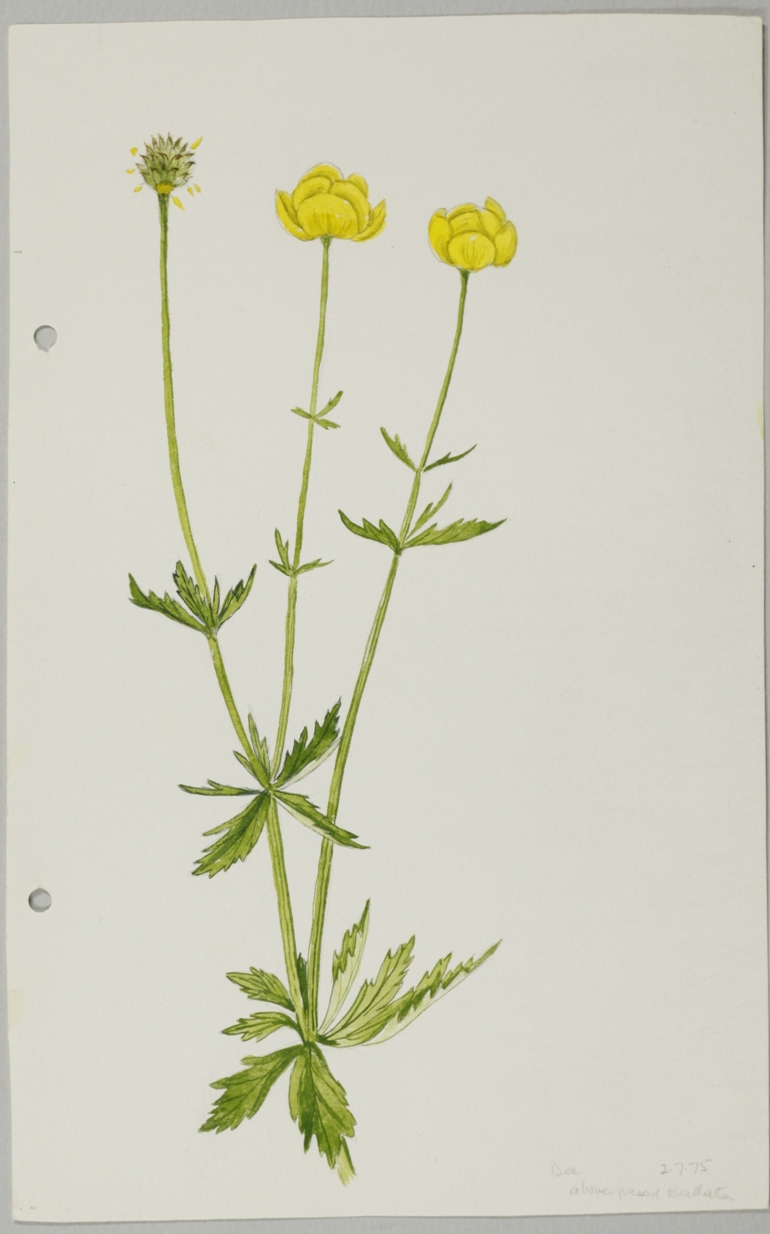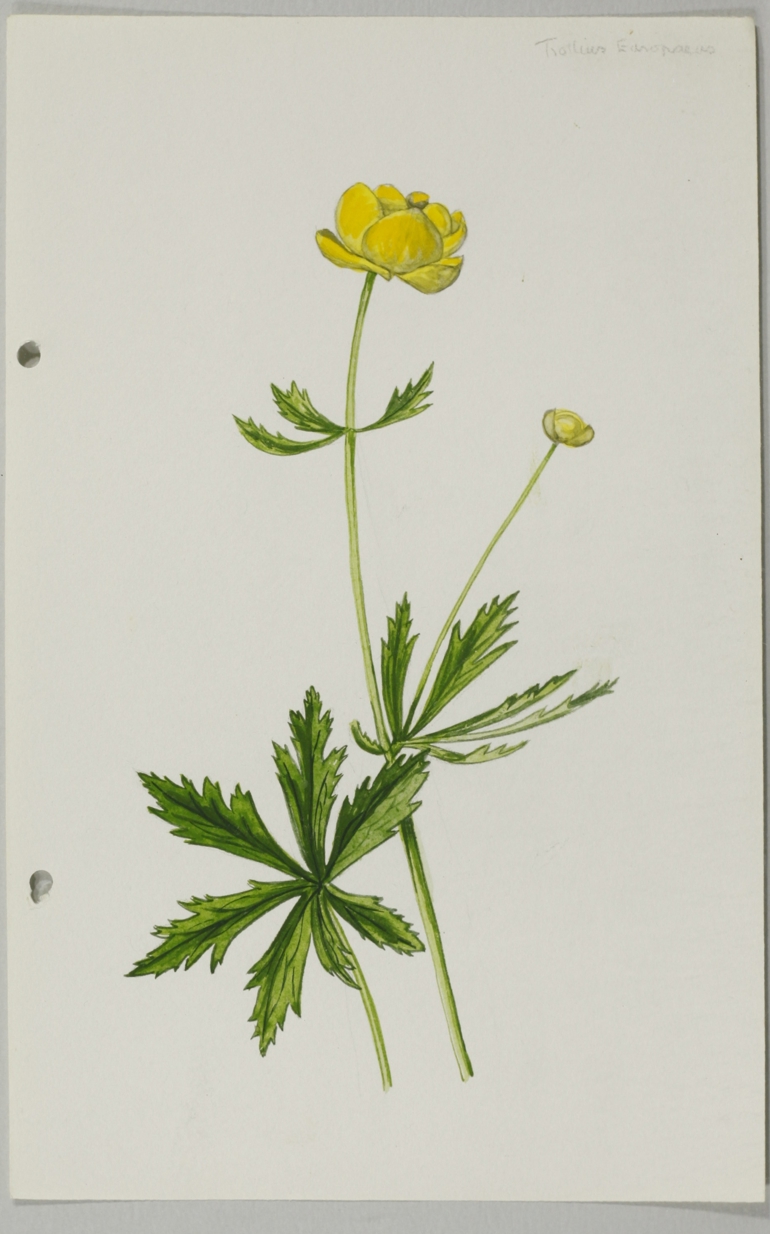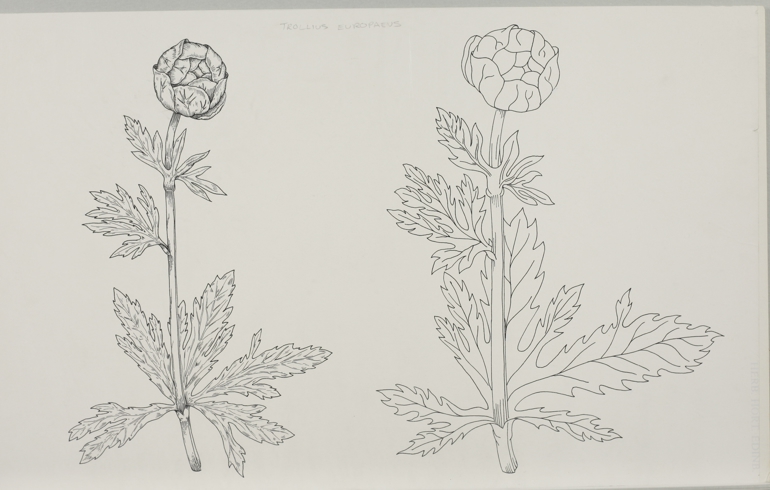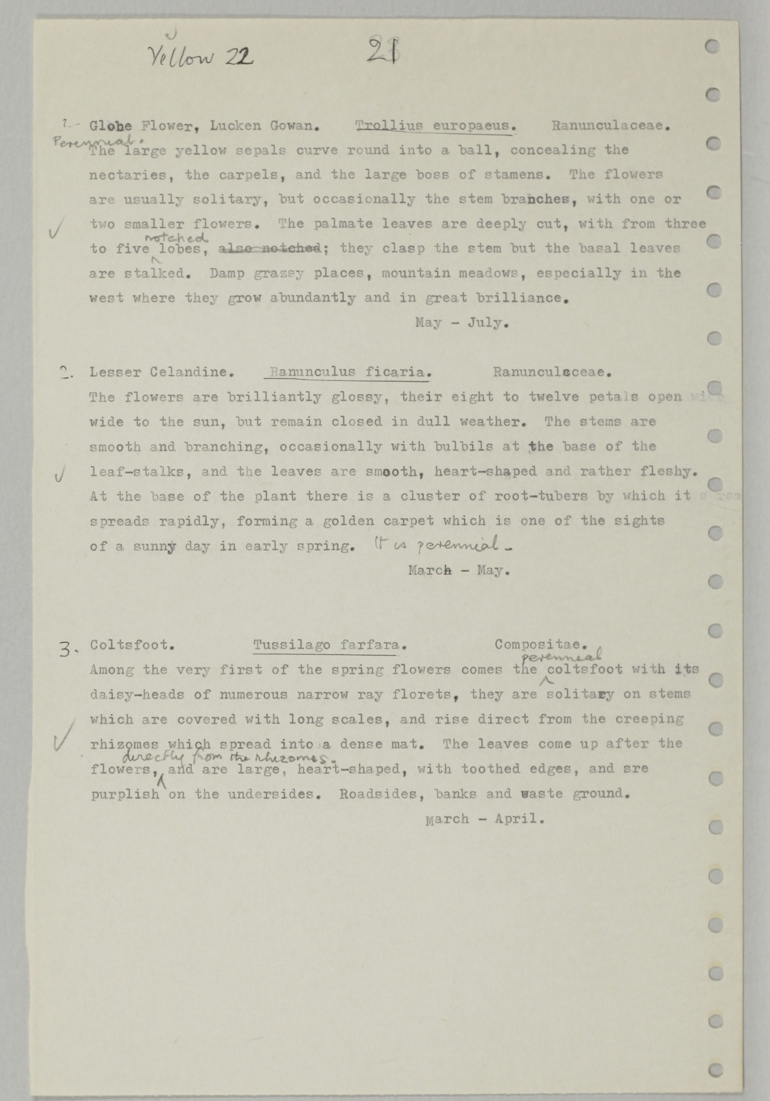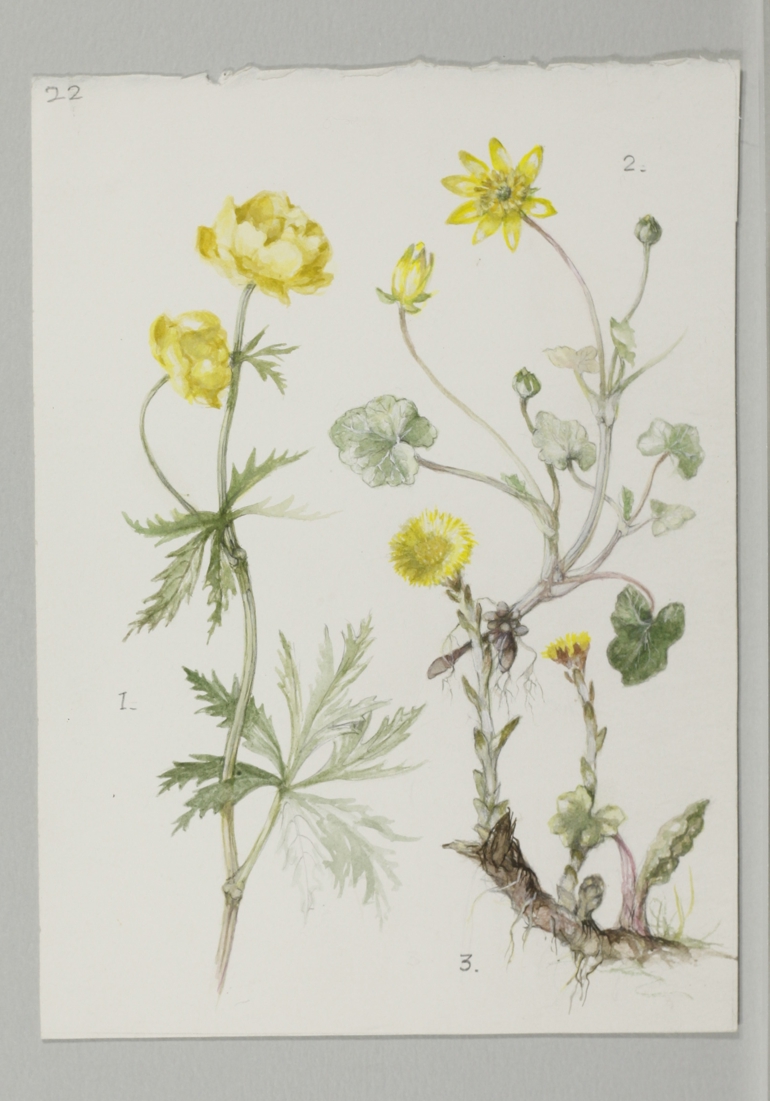

The Globeflower is protected in the UK under the Wildlife & Countryside Act as its wild population has seen serious decline due to agricultural drainage and excessive fertiliser use. It is an instantly recognisable species because of its tightly wound yellow, ball-shaped flower, which blooms throughout the summer months in wet meadows, along riverbanks, and in damp woodlands. It prefers cooler, northern regions of the UK, such as Scotland and Northern Ireland. The globe shape of the flower is cleverly designed to protect pollen and provide a sheltered hollow for root-maggot flies to meet and feed.
Across Northern Europe, the Globeflower has mythical properties, and in Scotland it is historically known as the ‘Witch’s Gowan’ - derived from the Gaelic name for the plant, where ‘gowan’ means bud or flower. It was thought that the distinct shape of the Globeflower’s petals locked out evil and protected the carrier from acts of witchcraft and malevolent spirits.