
Green Roof
Green Roof
Green Roof
-
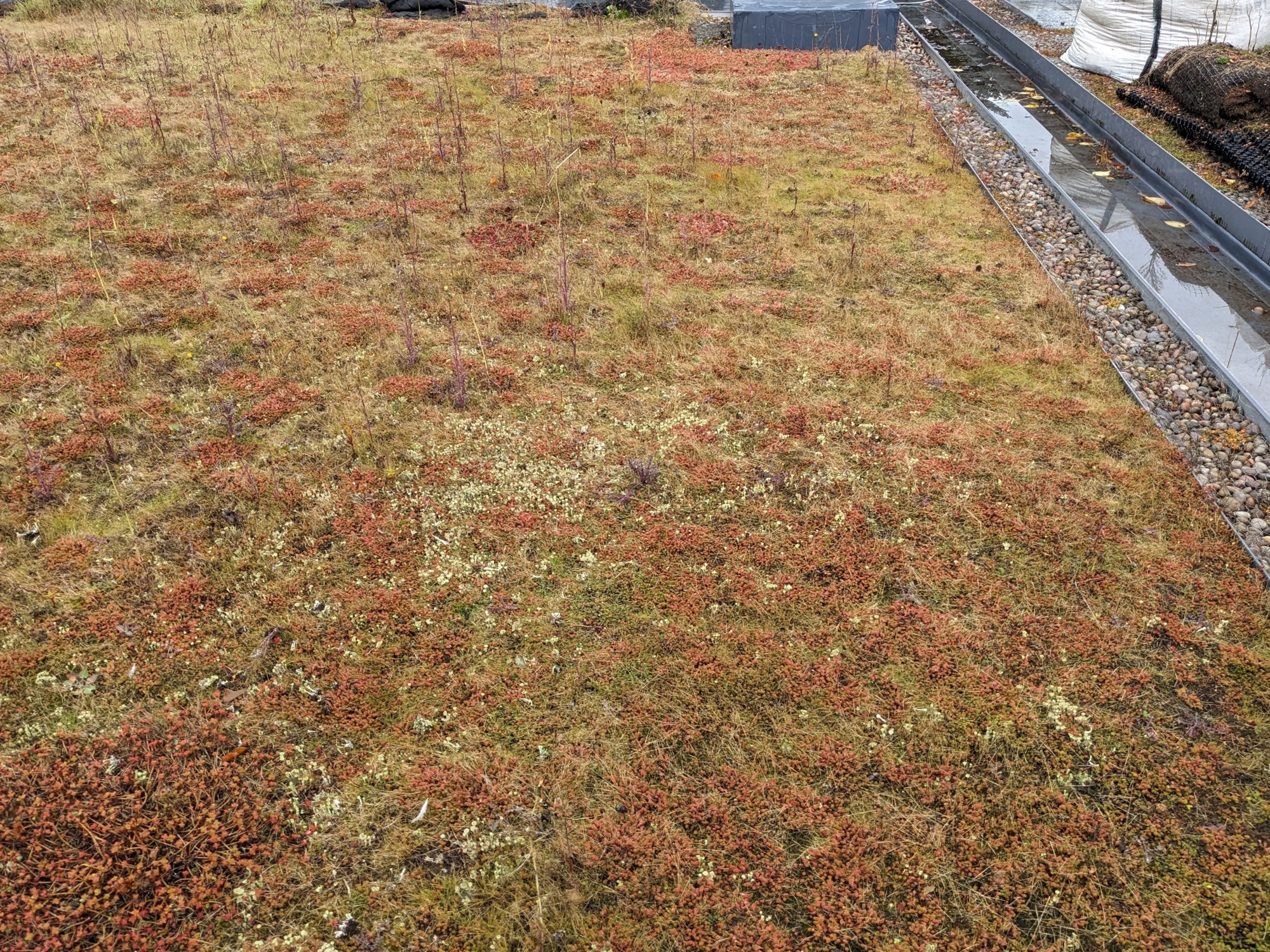
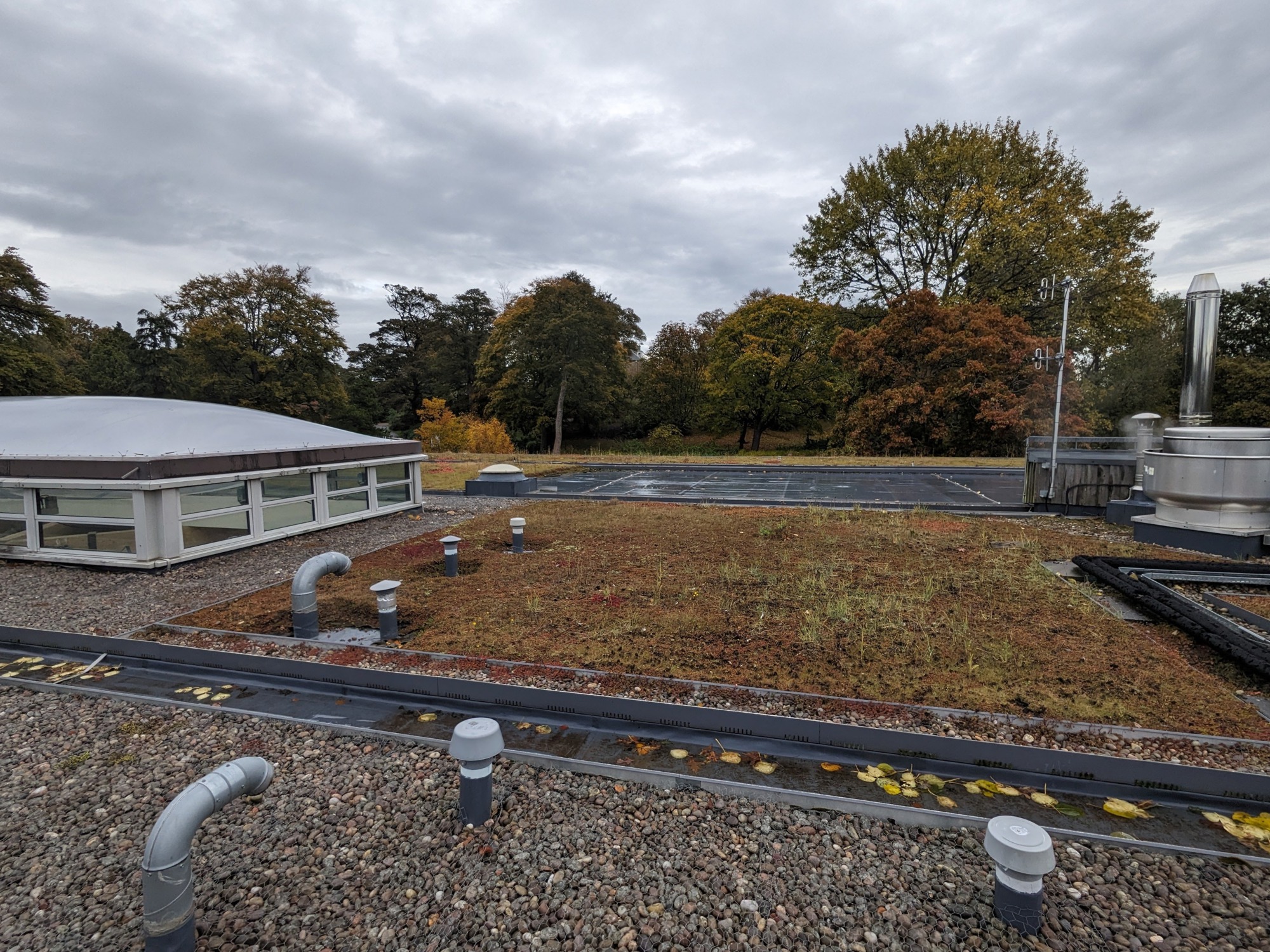
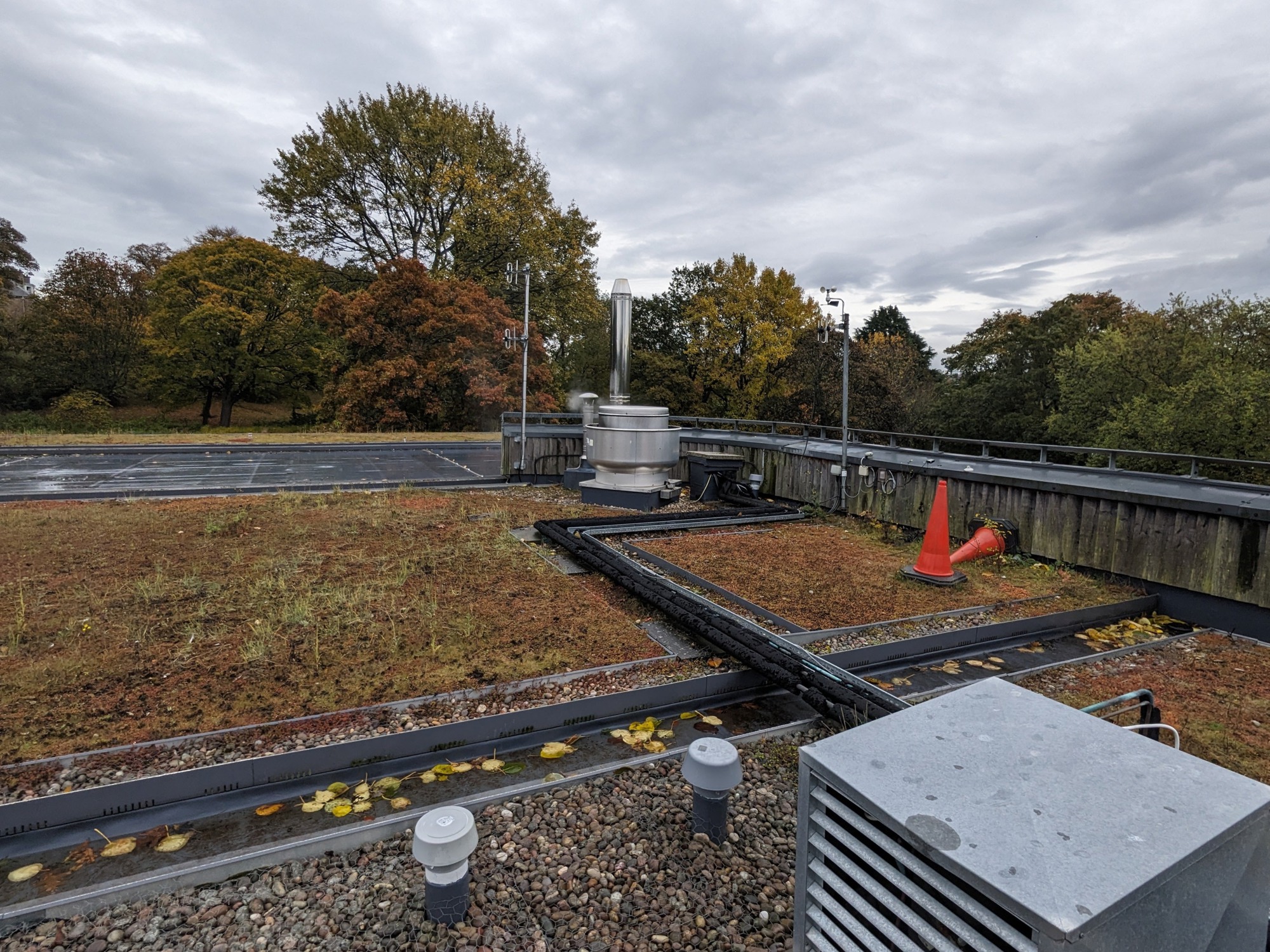
Green roofs are plants on the tops of buildings that pack a punch in all they can do. They collect rainwater, save energy, add beauty, and provide for wildlife. The plants on the green roofs at RBGE Edinburgh and Dawyck were sown with sedums, which are loved by pollinators, can handle water fluctuations, and don’t require deep soil to thrive.
Without plants, traditional impervious roofs block rainwater from being able to reach the ground. With nowhere to go, the rainwater hitting the roof gathers to the edges and creates flooding problems for the building below. A building the size of the John Hope Gateway displaces more than one million litres of water per year!
Green roofs harness that water, putting it to use for plants and pollinators and reducing the possibility of flooding. A typical green roof system of plants can retain 79 litres/m2, while the newest designs include a layer of bioretention cells below the plants that can detain and slowly release an additional 59 litres/m2.
Blankets of plants on roofs act as thermal buffers for buildings, saving on energy costs by improving efficiency. A green roof building loses less heat in cold weather, and gains less heat in hot weather, than a standard non-green roof.
To be successful, grey-green infrastructure solutions like these require teamwork from people in different departments. This is the “messy middle” of nature-based solutions, where maintenance can fall through the cracks if networking and knowledge exchange are not in place. At RBGE, the NBS Working Group has created new connections between departments to support the success of these interventions.