
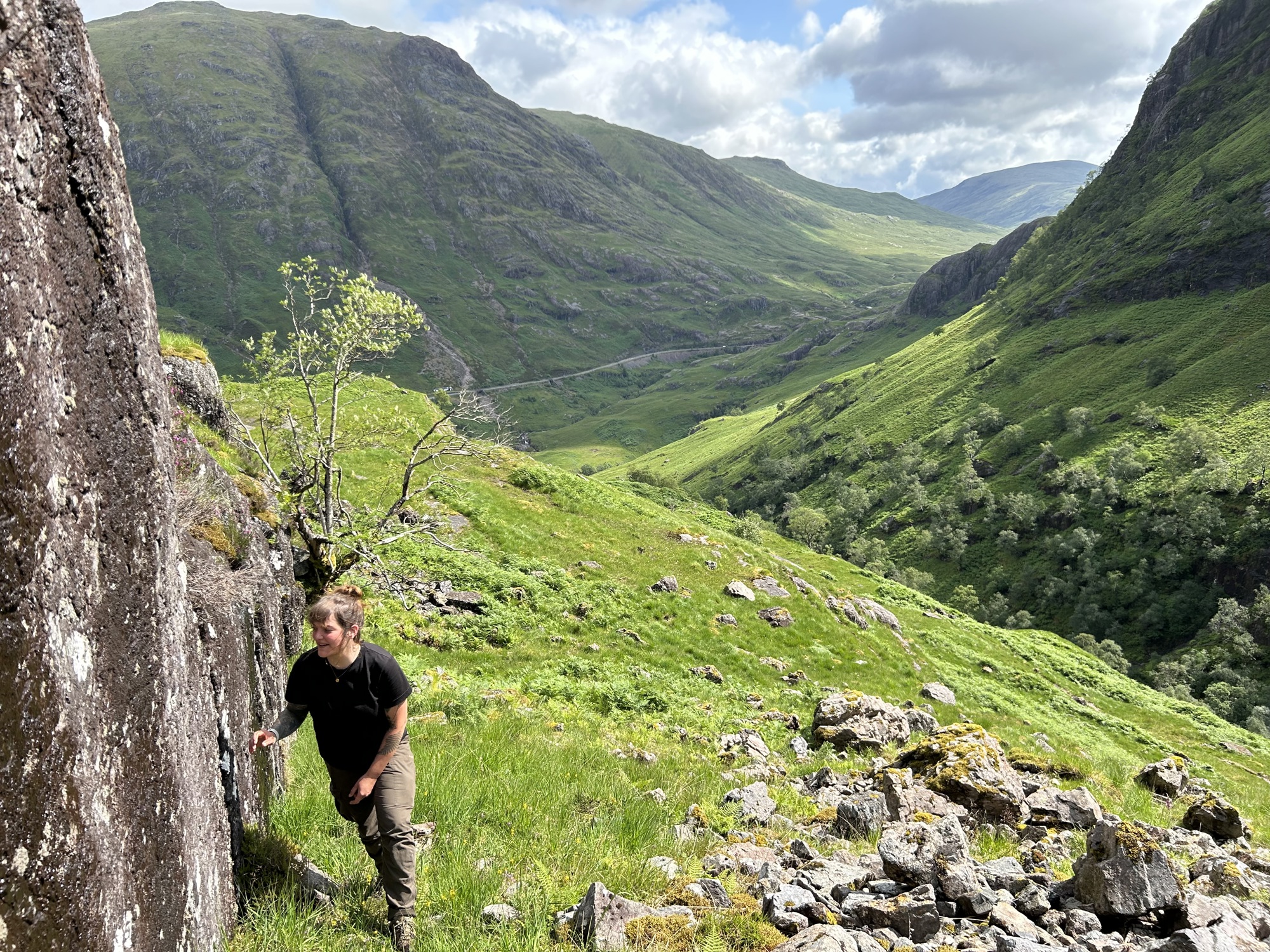
Kickstarting the Recovery of our Most Threatened Species
- Conservation science and genetics to identify constraints on regeneration and adaptation
- Innovative horticultural techniques to cultivate challenging species
- Long-term monitoring of conservation translocations to adapt and improve conservation strategies.
As part of the 3 year Scottish Governments Nature Restoration Fund, administered by NatureScot, the Scottish Plant Recovery Project is concentrating efforts on ten priority species, five habitat building tree species, four flowers and one fern. This ambitious programme aims to address the urgent need to prevent the extinction of Scotland's threatened plant species by focusing on increasing population sizes and enhancing genetic health. Plant species are carefully selected based on their threat levels, cultural importance, ecological roles, and likely success. Recognizing that in-situ conservation alone isn't enough, the Scottish Plant Recovery programme uses conservation translocations, which involves moving species to new, suitable habitats to ensure their survival and resilience.
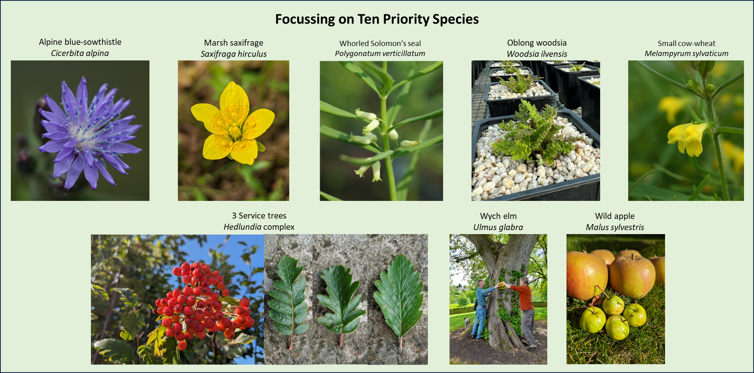
1. Wych Elm (Ulmus glabra): Once common, this species has been decimated by Dutch Elm Disease. The project's focus is on developing disease-resistant strains through managed pollination and propagation efforts.
2. Crab Apple (Malus sylvestris): This species is at risk due to hybridization with cultivated varieties. The project aims to retain its genetic integrity and ensure its continued presence in Scottish landscapes.
3. - 5.: Arran Whitebeam (Hedlundia arranensis), Arran Service-tree (Hedlundia pseudofennica), Catacol Whitebeam (Hedlundia pseudomeinichii): Unique to Scotland and only found on the Island of Arran. With a small population, this species is vulnerable to chance events and affected by grazing pressure.
6. Whorled Solomon’s-seal (Polygonatum verticillatum): This species faces challenges due to woodland habitat loss and remains in less than 10 sites in Perthshire, Scotland. Populations don’t reproduce or expand and genetic diversity is low compared to other, larger populations in continental Europe.
7. Small Cow-wheat (Melampyrum sylvaticum): This species faces challenges due to woodland habitat loss and remains in less than 20 sites across Scotland. Genetic diversity is low in most populations compared to other, larger populations in continental Europe. This flower may have lost its seed disperser, wood ants, but this is poorly understood in Scotland. The project explores dual translocation of plants and wood ants to recreate this potentially lost partnership.
8. Alpine Blue-sow-thistle (Cicerbita alpina): This species faces challenges due to woodland habitat loss and overgrazing. It remains in only 4 steep and vulnerable ledges in the Cairngorms, Scotland. Populations don’t reproduce or expand and genetic diversity is low compared to other, larger populations in continental Europe.
9. Marsh Saxifrage (Saxifraga hirculus): A European protected species facing threats from across its southern European distribution range, mainly from land use change, drainage, and over grazing. In Scotland it remains in only seven populations.
10. Oblong Woodsia (Woodsia ilvensis): This species has never been common but has been over collected during the Victorian fern craze and only 200 clumps survive in the UK across five populations, three of which are in Scotland. Only one population reproduces, and genetic diversity is low compared to other, larger populations in continental Europe.
