

Twenty-six years after being spotted by scientists on a mountain on a tropical island in Southeast Asia, a curious looking “jade ginger” plant with striking turquoise flowers has been published as a species new to science, thanks to a collaborative effort between botanists in Indonesia and the comparative northern cold of Scotland.
Some 7,000 miles from its natural habitat, the curious plant has been tended by top conservation horticulturists in the research houses of the Royal Botanic Garden Edinburgh. Together with research scientists they have watched and learned about their botanical enigma. Finally, it is officially published – and scientifically named - in the journal *PhytoKeys as Hellwigia opalina (Zingiberaceae).
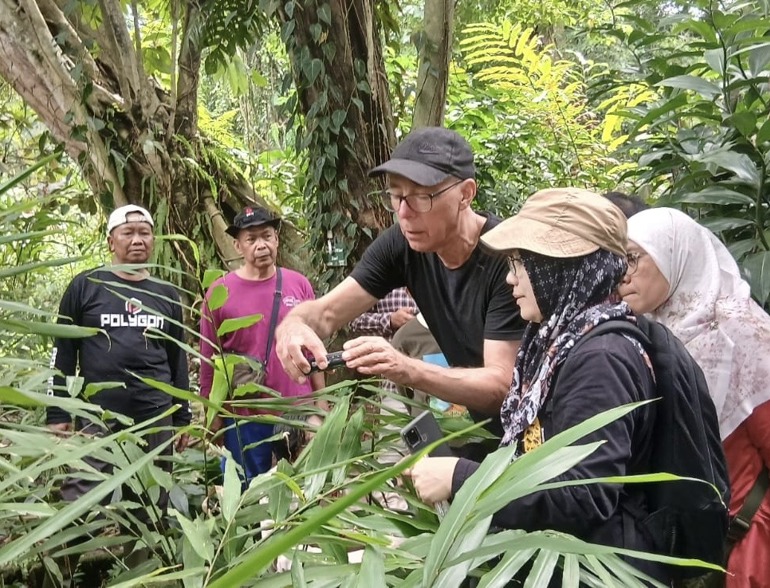
The adventure of discovery started on the Indonesian island of Sulawesi in 2000 when staff from the botanical gardens of Bogor, Indonesia, and Edinburgh noticed the unusual looking member of the ginger family on a remote mountain. The ensuing two decades of dedicated study by both teams underscores the value of ex-situ plant collections around the world.
Tropical botanist Dr Axel Dalberg Poulsen, an authority on Zingiberaceae, explained: “Sulawesi is known to be the only home to intriguing “jade gingers” not found anywhere else. This ginger with vivid turquoise-bluish green flowers was collected high on a mountainside and the rhizomes were cultivated. This allowed us the ability to study the development of flowers at close proximity.
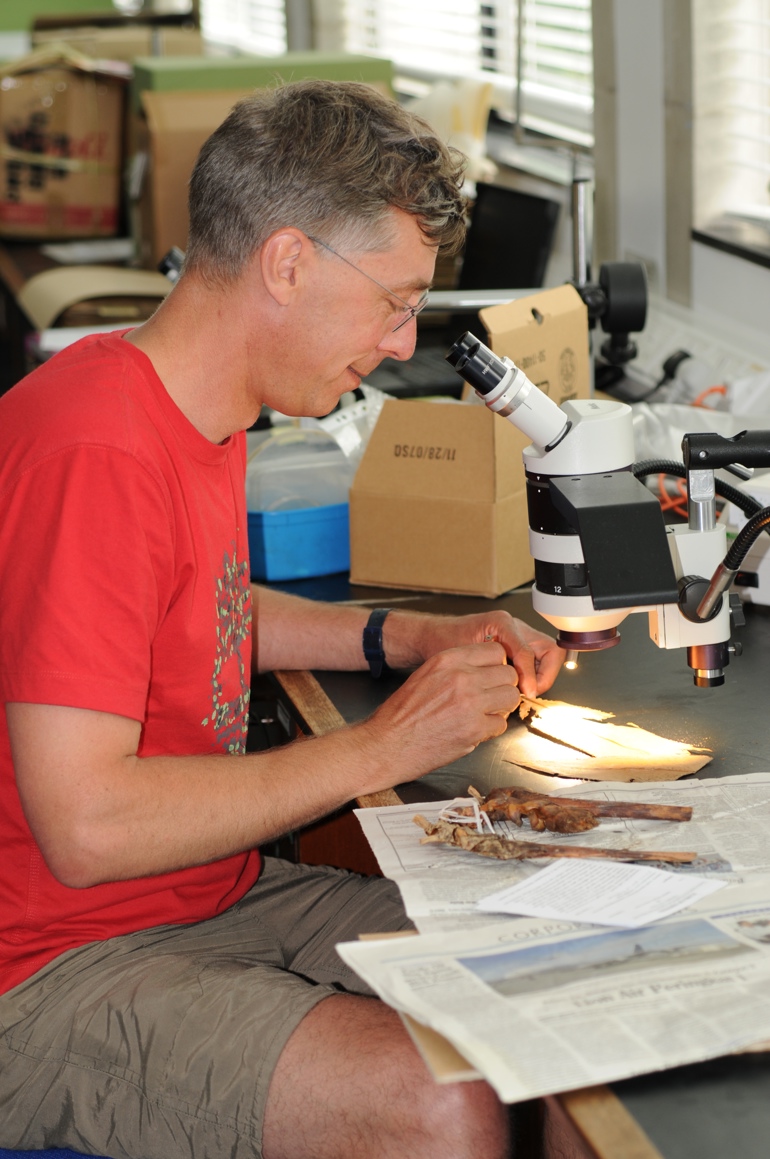
“Our plant here at the Royal Botanic Garden Edinburgh has now flowered several times, enabling detailed studies. We were able to document that this species in fact has two kinds of flowers. This ex-situ research has also facilitated genomics and cytological work - extracting DNA useful in recent groundbreaking molecular-based systematic work by Indonesian researcher Seni Senjaya.
“This gives us insight into the evolution of gingers and helps us to learn how this rare colour came about. Photographic images have been used to show the detail of its male and female flowers and other key traits. These images also help obtain a better morphological understanding of Hellwigia opalina and, of course, illustrate the scientific paper. However, there is still a great deal more to unravel and, in many ways, giving a plant a scientific name is just the start of the story. For example, we still do not know which pollinators are attracted by the curiously blue flowers. While ex-situ research cannot substitute fieldwork, the Glasshouses continue to be fundamental to our research so far and to future work in Sulawesi.”
The research partnership with Indonesa continues to evolve. In future years visitors will be able to see Hellwigia opalina, the vibrant jade ginger, for themselves. In Edinburgh, the plants will be on public display after completion of work on the tropical Glasshouses, part of the wider multi-million-pound Edinburgh Biomes restoration project, the next step of which is the restoration of the research houses.
Ends
For more information, images or interviews, please respond to this email, call Shauna Hay on 07824 529 028, or contact Suzie Huggins 07385 491 460
EDITOR’S NOTES
*Poulsen, A.D., Senjaya, S.K., Ardiyani, M. & Newman, M.F. 2026. Hellwigia opalina (Zingiberaceae) – a new species of the enigmatic jade gingers of Sulawesi. PhytoKeys 272: 169–180. DOI: 10.3897/phytokeys.272.171221
Turquoise-bluish green flowers are rare among the angiosperms. The most iconic example is the jade vine, Strongylodon macrobotrys, now commercially available and a popular greenhouse and conservatory plant.
Royal Botanic Garden Edinburgh (RBGE) is a leading international research organisation delivering knowledge, education, and plant conservation action around the world. In Scotland, its four Gardens at Edinburgh, Benmore, Dawyck and Logan attract around a million visitors each year. It operates as a Non-Departmental Public Body established under the National Heritage (Scotland) Act 1985, principally funded by the Scottish Government. It is also a registered charity, managed by a Board of Trustees appointed by Ministers. Its mission is “To explore, conserve and explain the world of plants.”