
New research shows community leaders could hold the key to resolving Madagascar’s environmental conflicts.
A new study led by the Royal Botanic Garden Edinburgh offers a locally-rooted approach to resolving long-standing global conservation conflicts, such as human-set fires in Madagascar. The research finds that punitive measures focused on those who light fires are fundamentally ineffective because they focus on the symptom – fire - rather than the underlying social and economic reasons why people are driven to light fires.
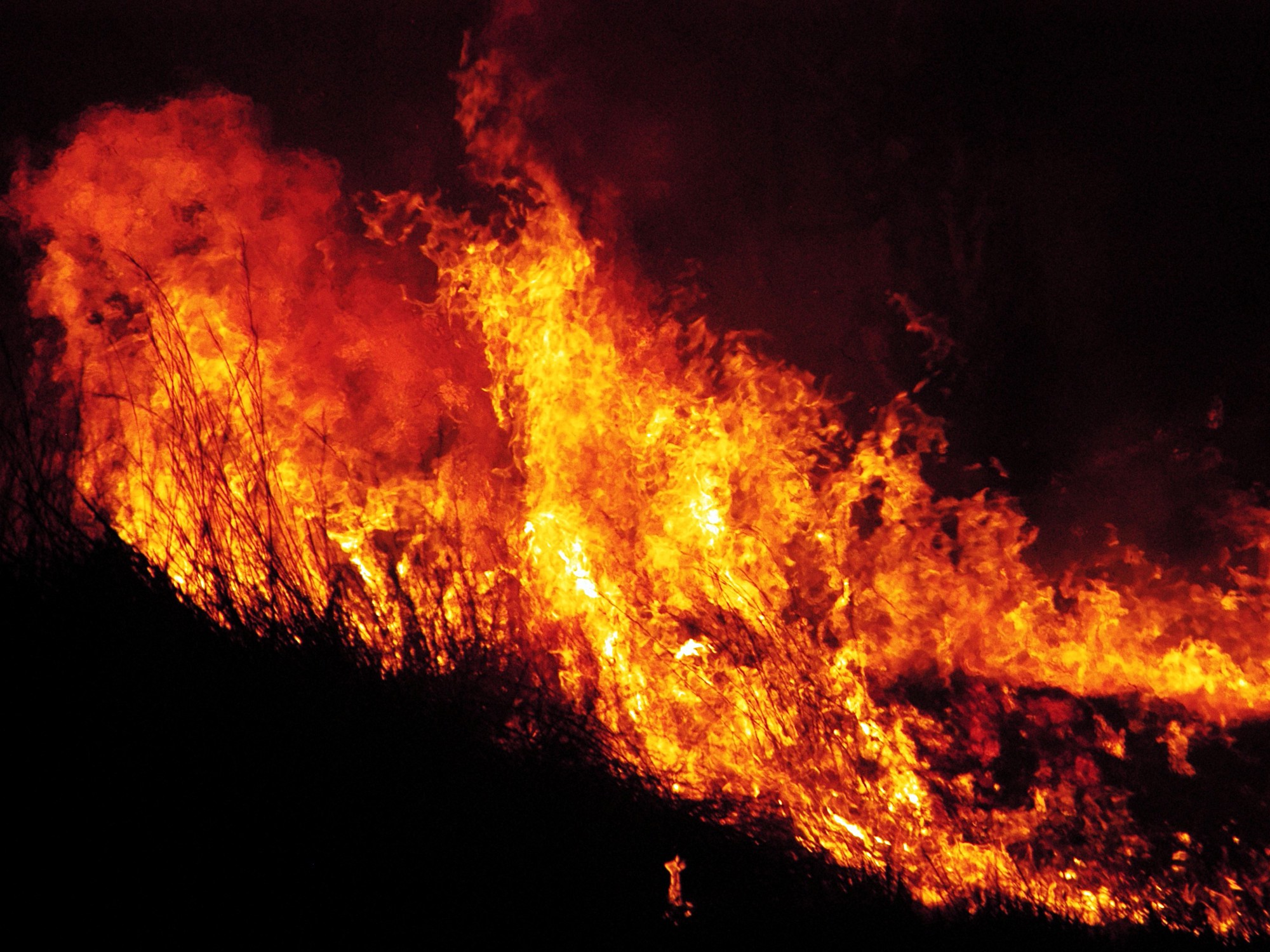
For decades, the burning of biodiverse grasslands by farmers and cattle herders has sparked bitter disputes in Madagascar. Traditional farming methods, which use fire to renew pasture and clear fields of weeds, have been at odds with modern conservation goals that seek to remove fire from all ecosystems.
Official efforts to curb this practice have largely relied on punitive sanctions such as fines and arrests. However, these top-down measures have had limited success and, in some cases, actively backfired.
"When fire-setting is criminalised, people set fires in secret and leave blazes unmanaged, leading to larger fires that are harder to manage," explains Dr. Elliot Convery-Fisher, Research Fellow at the Royal Botanic Garden Edinburgh.
"To truly protect fire-prone conservation areas, we must move away from simply punishing the act of lighting the fire, towards empowering trusted local people to speak openly about their legitimate needs around fire. In this way we can move from treating the symptom to fixing the underlying illness."
The research mapped the views of government officials, conservation groups, community leaders, farmers, and cattle herders. Despite the conflict, the research found a surprising level of consensus and a clear opportunity for mediation. To achieve sustainable conservation, the scientists argue that efforts must pivot to addressing these socio-economic drivers and the community needs that motivate fire use.
The lessons learned in Madagascar, of the need to understand the 'why' behind human behaviour before focusing on punishment, offers a blueprint for conversation globally, including disputes closer to home, such as those concerning peat use or predator rewilding in the UK.
“Understanding fire conflict through stakeholder mapping in Madagascar’s Grassy Biomes” was published on December 8 2025 in People and Nature.
Main image: Dr Elliot Convery-Fisher presents the results of the team’s work back to communities in Madagascar
Banner image: Agricultural fire in Madagascar Licensed under CC BY-NC-SA 2.0 by GRIDArena