

The Palm Houses
A history
For over 200 years, the Palm Houses have stood at the heart of the Royal Botanic Garden Edinburgh, A-listed structures and an iconic part of Scotland's heritage.
Building the Palm Houses
The oldest of the two Palm Houses, an irregular octagon, was built in 1834 - at the time, the tallest traditional Palm House in Britain. It arrived not long after the Garden itself had relocated to Inverleith in the 1820s, as more space was needed to house an expanding collection of exotic plants.
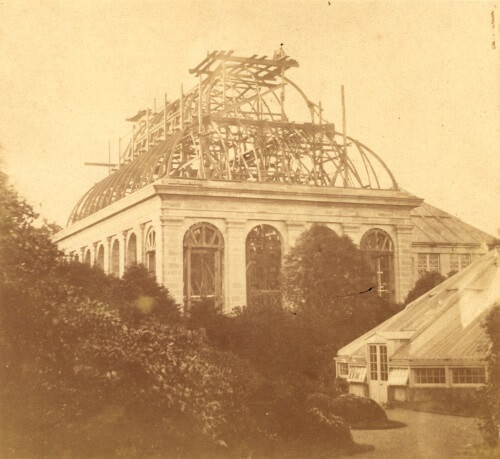
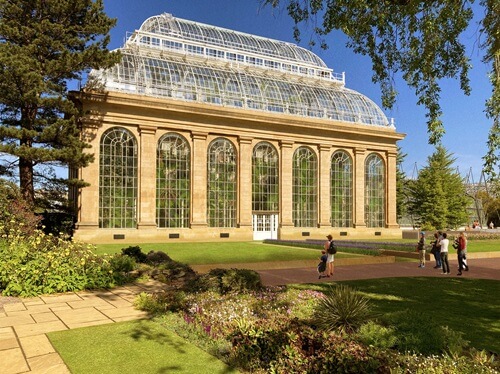
By the mid-1850s, trees inside were outgrowing the building. Parliament funded a second, larger Palm House in response, designed by Robert Matheson and completed in 1858. Built from Bishopbriggs sandstone with a Tuscan-style façade and a curved iron-and-glass dome, the two buildings combined held more than 5,000 panes of glass.
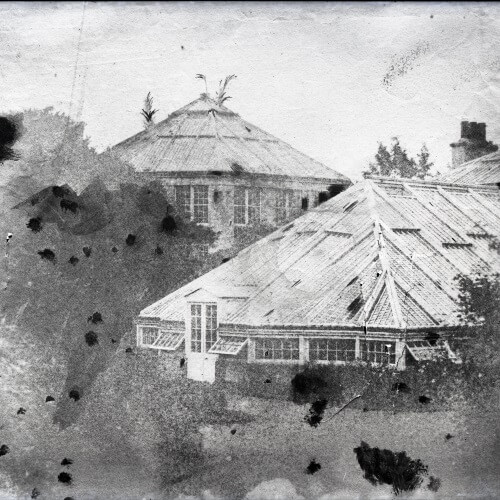
Image: The octagonal Palm House, pictured with palm fronds breaking through the roof in 1855.

One space, then two - then one again
The relationship between the two Palm Houses has shifted more than once. A partition was built between them in 1859, then removed in 1874 to create a single tropical zone, before going back up again later that century. Over a century on, the current restoration has removed it once more - reuniting both glasshouses into a single space for the first time in a generation.
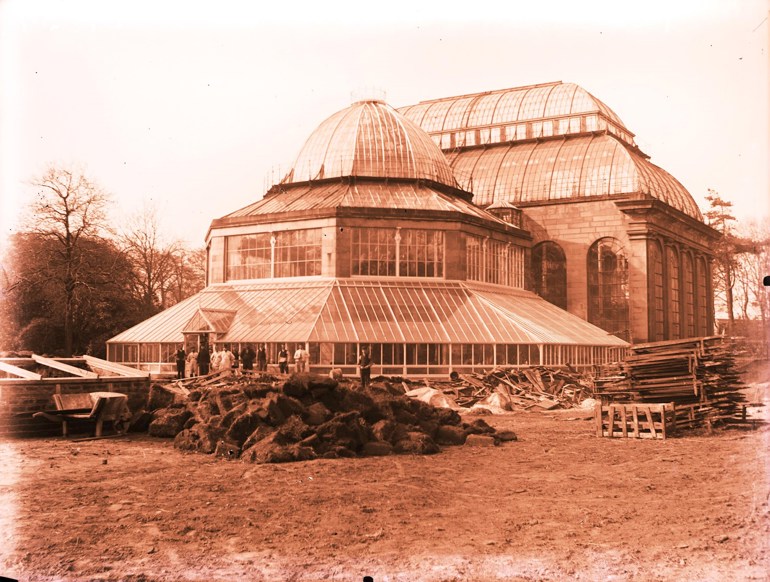
Image: The Palm Houses from the rear in the 1890's.
Opening up the architecture
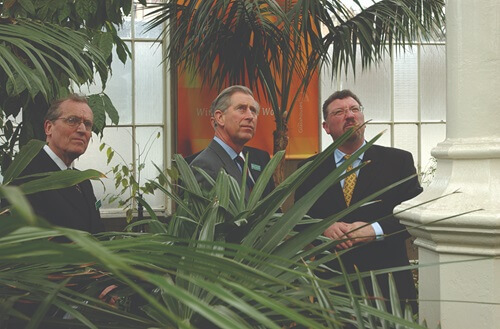
The Palm Houses saw one of their most significant transformations in 2005, when a new glasshouse experience called Windows on the World was unveiled. The Temperate Palm House was opened up to reveal architecture that had long been hidden from view, and a new reception desk was crafted from the timber of trees removed during the works.
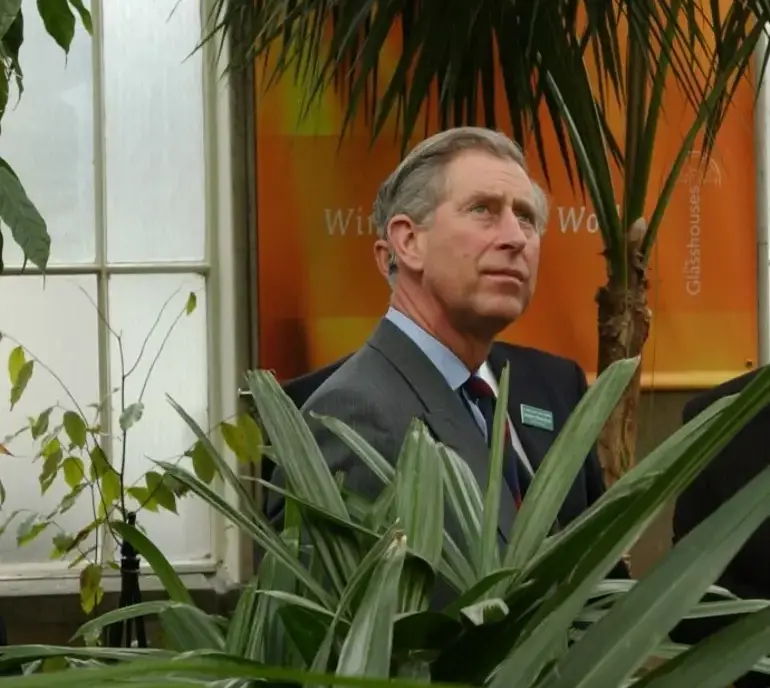
Image: HRH King Charles at the official opening of 'Windows on the World' glasshouse experience in 2005.
A new chapter
By 2017, decades of weathering had left the Palm Houses in need of more than repairs. Plans were drawn up for a full renovation, and in 2022, major restoration work began as the first phase of the Garden's ambitious development and restoration project, Edinburgh Biomes. After years of artisan craftsmanship, the buildings have been beautifully restored, ready once again to safeguard the Garden's globally important Living Collection of plants. The Palm Houses will reopen to the public in October 2026.
Nearly two centuries on from that first octagonal glasshouse, the Palm Houses' story continues.
Read about the restoration
One resident, two centuries - and a secret identity
One of the most iconic plants in the former Tropical Palm House was a palm that had been transported from the Garden’s previous site at Leith Walk in the early 1820s. One of the oldest plants in the Living Collection, it was too large to be moved and sadly had to be felled before restoration work began in 2021.
For two centuries it was known as Sabal bermudana - until research carried out following its removal revealed it more likely Sabal mexicana - a species not even formally described by science until 1838. Horticulturists had been collecting its seed for years beforehand, and a young palm grown from that seed now grows in the restored Palm Houses, continuing a story nearly 200 years in the making.
Image: the Sabal, photographed in the centre of the Tropical Palm House in 1874 after its move and ‘retubbing’ by Head Gardener James McNab and his team.
Read the Sabal palm's full story

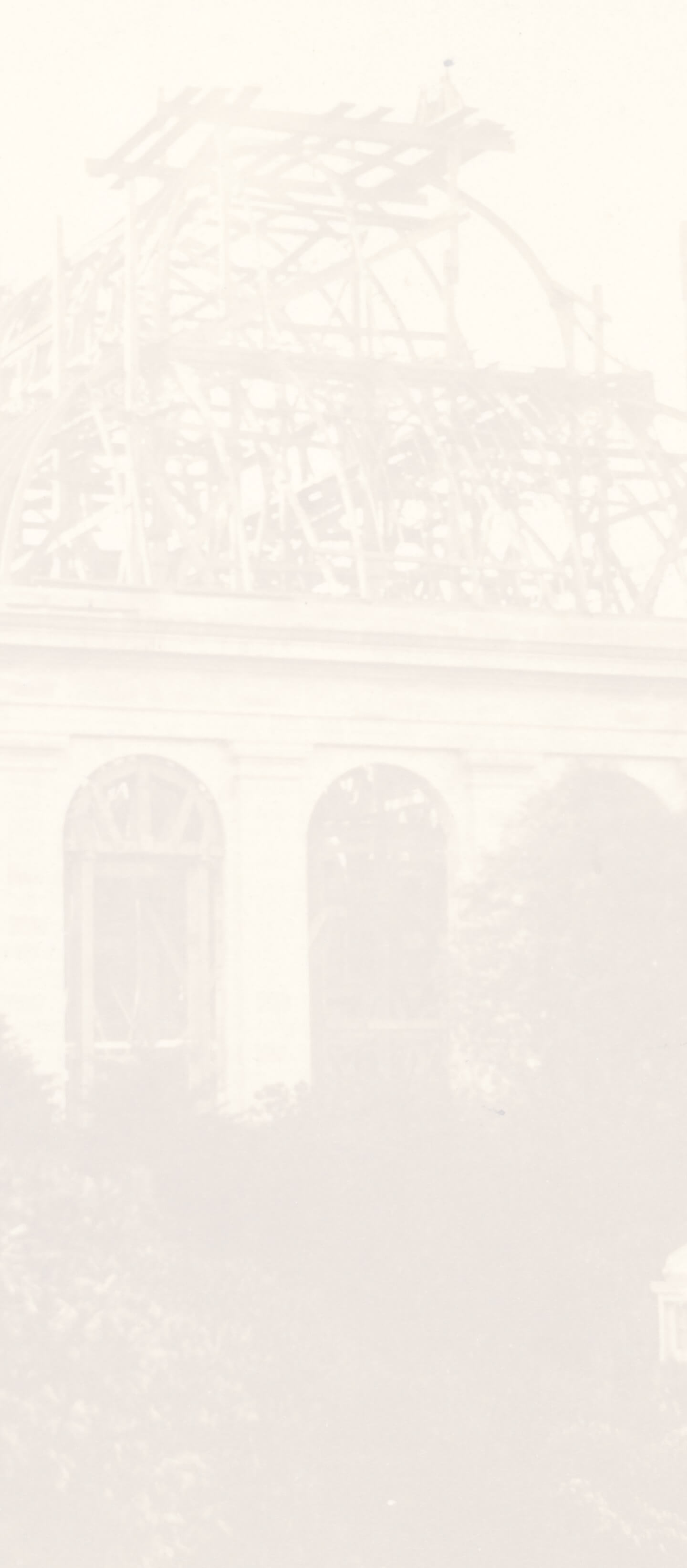
Palm houses timeline
-
1820 - 1824
The Garden Moves
The garden moves from Leith Walk to Inverleith.
-
1834
The First Palm House
With more space needed for new exotic plants, the first of the Palm Houses is built. An irregular octagon, it is 18m wide.
-
1855 - 1858
A New Palm House
As several trees send their leaves through the roof, parliament agrees to provide £6,000 for a new Palm House to be designed by Robert Matheson. Built of sandstone from a quarry at Bishopbriggs, the façade is “relieved by pilasters and entablature of the Tuscan style”. The roof is formed of curvilinear iron rafters forming a dome of two stages. Matheson will go on to build the fountain in the courtyard of Holyrood Palace.
-
1859
A Partition Is Built
A partition is built between the two Palm Houses.
-
1860
A New Roof
A new roof made of cast iron and glass matching the dome of the new Palm House is built on the old one.
-
1874
Creating One Tropical Zone
The partition is removed to create one tropical zone. The Sabal palm - the oldest specimen in the collection - is moved back to the old Palm House, its fourth move since 1820, though it is still not planted in the ground.
-
1892 - 1893
Improving Light Transmission
'Skirts' are added to the old Palm House and seven stone pillars are replaced by slim cast iron ones to improve light transmission. Around the same time, the partition is reinstated and the Sabal palm finally planted in the old (or Tropical) Palm House.
-
1869
Remodelling
The Palm Houses are remodelled as part of the tercentenary celebrations. This includes the removal of the 'skirt' from the Tropical House. The formal rectangular beds with the red ash paths in the Temperate House are re-landscaped, greatly increasing the planting space.
-
1876
The Reopening
Both Palm Houses reopen after being closed for renovations and heating upgrades.
-
2005
Windows On The World
Prince Charles opens the new glasshouse experience, 'Windows on the World'. The Temperate Palm House has been opened up to reveal architecture previously hidden from view. There is a new reception desk made of wood from the removed trees.
-
2017
Envisaging A New Visitor Experience
Plans are laid for the Palm Houses and 1960s glasshouses to be emptied, renovated and replanted following their unsustainable degradation. A new visitor experience is envisaged, showcasing the species in our Living Collection.
-
2024
Save The Palm Houses
A major public fundraising campaign launches to support the restoration of the Palm Houses. The work is at the heart of the Edinburgh Biomes Project.
The restoration
The Palm Houses will reopen on 2 October 2026. See how heritage skills and craftsmanship have restored the buildings to their former glory.
Read more